You've got the kit ready, the paper laid out, and a baby who has decided - with surprising determination - that their hand is staying firmly shut. Sound familiar?
You're not doing anything wrong. That tight little fist is one of the most common reasons parents give up on handprints, and it has a perfectly good explanation. The brilliant news is there's a simple knack to it, and once you know it, you'll wonder why it ever felt so tricky.
These tips come straight from Ashley, our co-founder. As a Memory Catcher, she takes hand and footprints from 10 to 20 babies a day, Monday to Friday - so when it comes to coaxing open a stubborn little fist, she's seen (and solved) it more times than she can count. It's the same work other parents now do in their own areas as Memory Catchers themselves.
Why Won't My Baby Open Their Hand?
It's called the palmar grasp reflex. Babies are born with it - it's the same instinct that makes them curl their tiny fingers around yours so tightly your heart melts. It's completely normal and a sign everything is working exactly as it should.
The catch is that this reflex keeps their hands balled into fists for the first few months, usually relaxing somewhere between three and six months of age. Which is precisely the window when most parents are trying to capture those newborn-tiny hands. No wonder it feels like a battle of wills!
The Trick: Stroke, Don't Force
Never try to prise a baby's fingers open - it won't work, and it'll upset both of you. Instead, work with the reflex:
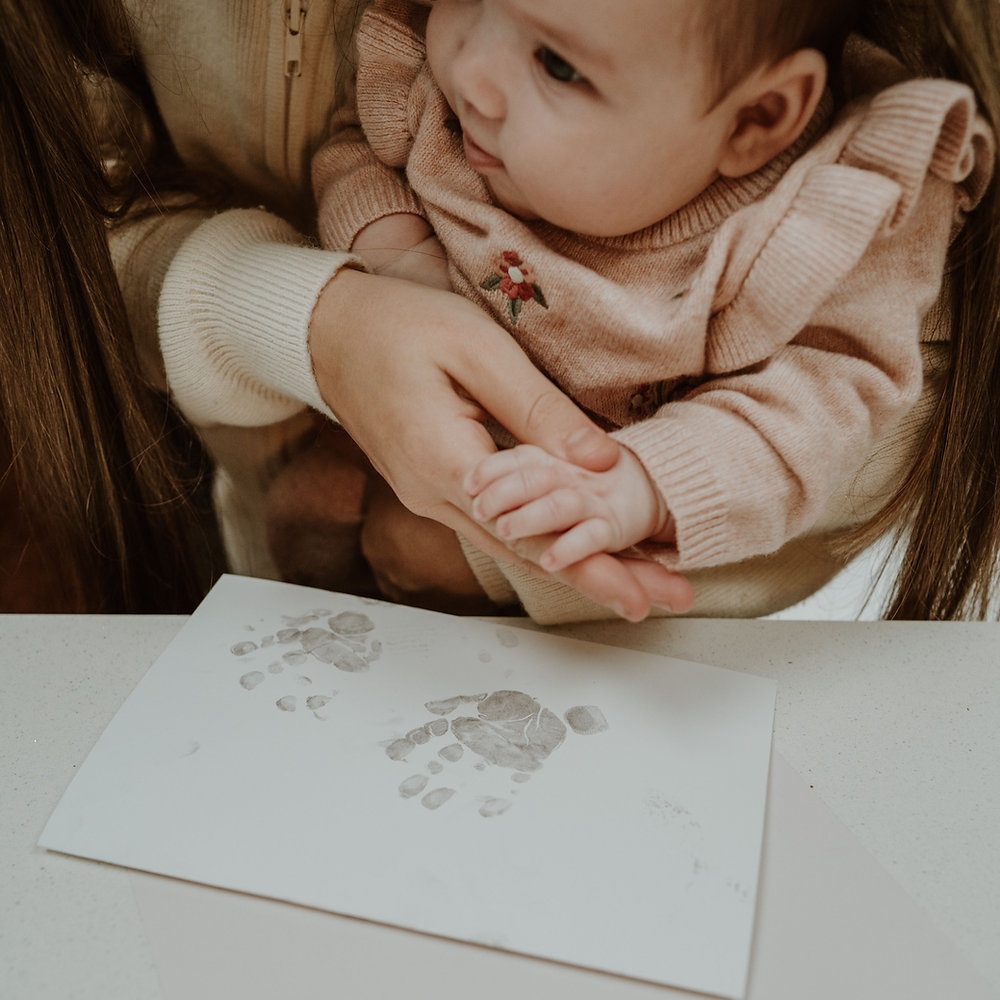
Stroke the back of the hand. Gently run your finger from their wrist towards their knuckles along the back of the hand. This naturally encourages the fingers to splay open, without any force at all.
Catch them sleeping. This is the single best tip we can give you, and it's the one Ashley relies on most out in the field. During deep sleep, that grasp reflex relaxes all on its own. Look for the signs - limp limbs, steady breathing, no flickering eyelids - and you'll often find the hand is already half-open and ready.
Feed first. A full, drowsy baby is a relaxed baby. Hungry babies tend to clench those fists tighter, so just after a feed - when they're milk-drunk and content - is one of the best moments to catch an open hand.
Distract them. For an alert, curious baby, a gentle distraction works wonders. Sing them a song, chat away to them, or simply talk them through what you're doing. A baby focused on your voice is far less focused on keeping that fist shut.
Warm the hand. Cold hands clench tighter. If their fingers feel chilly, cup the hand in yours for a moment first.
Be ready to move fast. The moment the hand opens, bring the paper up to the hand rather than pulling the hand down to the paper. One quick, confident press and lift - then celebrate.
As a Memory Catcher, Ashley takes hand and footprints from many babies Monday to Friday at local baby classes and events. She uses our special inkless hand and footprint kits (the exact ones we post out to our customers from our online store).
The Honest Shortcut: Start With Feet
Here's what experienced parents learn quickly - if hands are being stubborn, do the feet first.
It's the same approach Ashley takes when a baby simply isn't in the mood to open up. Footprints are far easier at the newborn stage. Hold the foot gently by the ankle and roll it from heel to toe onto the paper, and it naturally opens out. Many parents capture beautiful footprints in the first few days, then come back for handprints a few months later once the grasp reflex has relaxed. There's no rule that says they have to be done on the same day, or even in the same month.
So What's the Best Age for Handprints?
If you want truly tiny newborn hands and you're happy to work around the fist (sleeping baby, stroke technique), the first few weeks are magical.
If you'd rather an easier ride, three to six months is the sweet spot - the reflex has usually relaxed, hands open more willingly, but those fingers are still gorgeously small.
A little trick for older babies, around six to twelve months: try picking them up and leaning them gently forward. Most babies will instinctively put their hands out in front of them - a natural reflex that gives you a lovely open palm to work with. It's one of Ashley's favourites for the wrigglier age group.
And honestly? There's no wrong answer. A handprint at any age captures them exactly as they are right now.
The One Thing That Makes It All Easier
Most of the stress comes from having only one shot. With our Foil Hand & Footprint Kit, you get four sheets of reactive paper - so a clenched fist or a wriggle isn't a disaster, just a practice run. And because it's completely inkless, there's no mess to clean up between attempts. Just a gentle, baby-safe wipe and the print appears like magic.
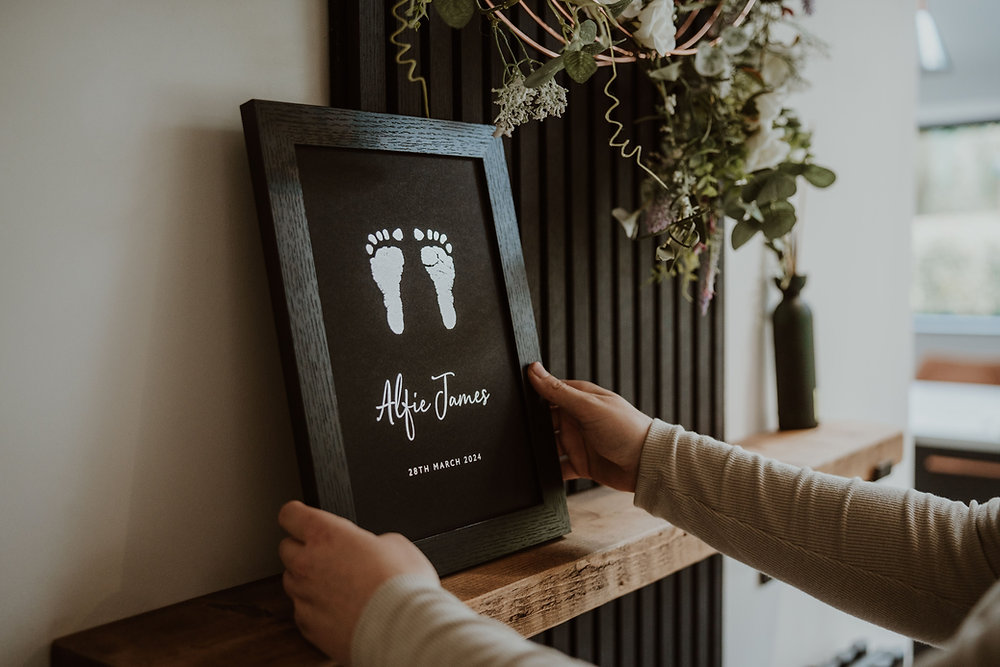
When you've got one you love, you upload it and we transform it using our exclusive Foil Fusion Technology™ - and our team gently neatens any little imperfections by hand, so even a slightly wobbly first attempt becomes something beautiful.
Quick Answers
Why does my baby keep their hand in a fist? It's the palmar grasp reflex, present from birth and usually relaxing between three and six months. It's completely normal.
How do I open my newborn's hand for a print? Stroke the back of the hand from wrist to knuckles - never force it. Better still, take the print during deep sleep when the hand relaxes naturally.
Should I do handprints or footprints first? Footprints are much easier for newborns. Many parents do feet early and come back for hands at three to six months.
What's the best age to take baby handprints? First few weeks for the tiniest hands (work around the fist), or three to six months for an easier print.
You've Got This
That clenched little fist won't last forever - and neither will hands this small. With the right moment and a gentle touch, you'll get a print you treasure for life.
Order your kit today and capture those tiny hands, fist and all.
Love, Ashley Co-founder, Bespoke Foil Company & Memory Catcher Franchise™